
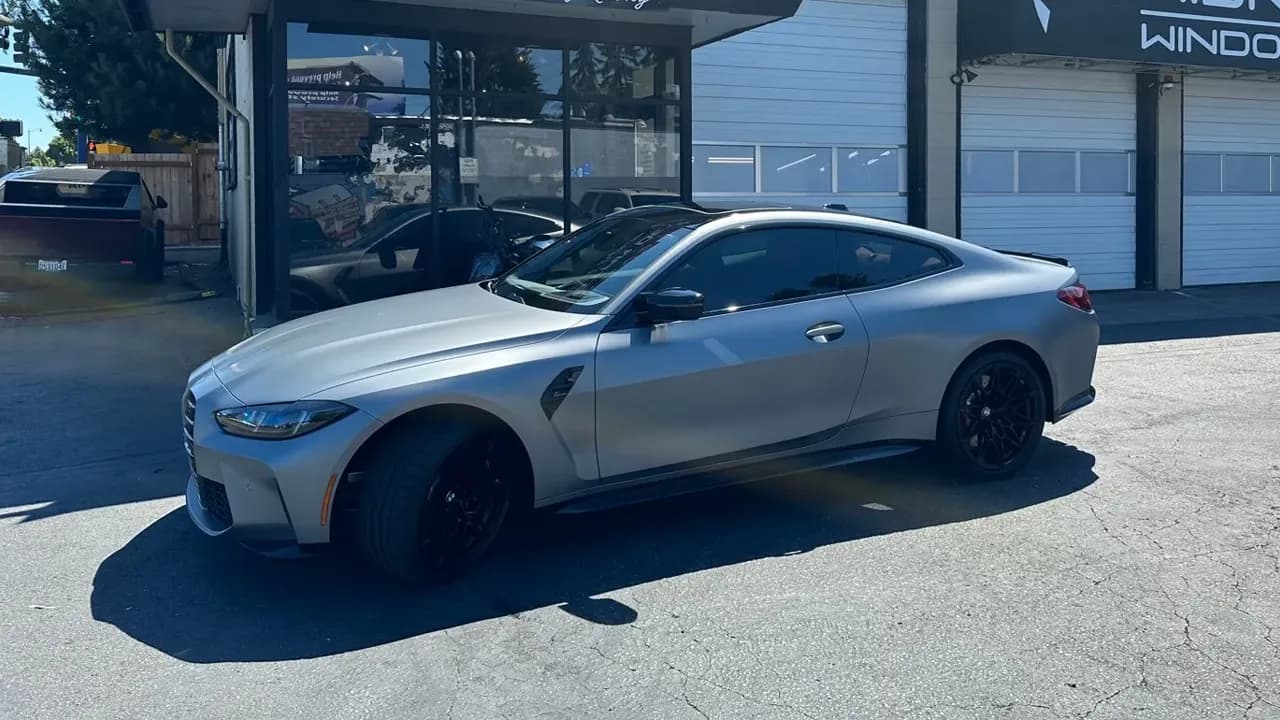
Paint protection film is the most expensive thing we install, so it deserves a straight answer rather than a sales pitch. Here is what it does, what the Big Island specifically does to paint, and where the coverage is genuinely worth paying for.
What PPF actually is
Paint protection film is a thick, optically clear urethane film applied over your paint. The film we use is 8 mil — meaningfully thicker than a wrap vinyl — with a self-healing elastomeric layer and a ceramic top coat, backed by a warranty of up to 10 years.
Three properties matter:
- Impact absorption. A stone that would chip paint spends its energy deforming the film instead.
- Self-healing. Light swirls and fine scratches in the top layer return to flat with heat. A warm afternoon does it on its own.
- Chemical resistance. The top coat resists the things that etch clear coat — bird droppings, tree sap, industrial fallout, acidic deposits.
It is not armour. A hard enough hit at a sharp enough angle will still mark a panel. What it does is convert the everyday attrition that ruins a front end over three years into something invisible.
What the Big Island does to paint
This is where the general case becomes a local one.
Rock chips from open highway driving. The Queen Kaʻahumanu Highway runs north out of Kona across open lava country. It is fast, it is exposed, and it carries a steady mix of trucks, construction traffic and rental cars. Loose cinder and grit on the shoulder gets picked up and thrown. A front bumper, hood edge and mirror faces take that constantly.
Volcanic cinder and dust. Lava rock is abrasive in a way that ordinary road dust is not. It is sharp, it does not round off, and when it lands on a panel and someone wipes it off dry, it scratches. A great deal of the swirl damage we see is not from driving — it is from wiping dust off a hot car with the wrong cloth.
Salt air. The Kona coast is leeward and dry, but it is still ocean-facing, and salt-laden air travels inland. Salt accelerates corrosion at any point where paint is already compromised — a stone chip that has gone to primer is an entry point, not a cosmetic issue.
Vog. Volcanic smog from Kīlauea is a genuine feature of life on this island. The prevailing north-easterly trades carry the emissions around the south of the island and back up the leeward side, so Kona sits downwind more often than most places. Vog is sulphur dioxide gas plus a fine aerosol of sulphuric acid droplets and sulphate particles — the USGS compares those droplets to dilute battery acid. In practical terms it settles as a film on horizontal surfaces, and it is a large part of why a vehicle here benefits from being washed more often than the same vehicle would on the mainland.
Any one of these is manageable. Together, on a vehicle that lives outdoors, they are why three-year-old paint here can look older than it should.
Where coverage actually pays
You do not have to film the whole car. Coverage runs in tiers, and the value is not evenly distributed.
The front end earns its keep first. Bumper, hood, fenders, mirrors, headlights and fogs take essentially all of the impact damage. This is the single highest-return coverage on any vehicle.
- Deluxe (partial front) covers the leading edge — a partial hood and fenders, headlights and fogs, bumper, mirrors, door edges and door cups. It is the value option and it stops the majority of chips.
- Ultimate (full front) takes the hood and fenders full, so there is no line across the hood. This is the most popular kit for a reason: partial coverage leaves a visible edge on a hood, and on a dark car people notice it.
- Full vehicle covers every painted surface. It is the right call for a show car, a high-value vehicle, or paint that is expensive to correct.
Door cups and door edges are cheap to cover and are where fingernails and neighbouring car doors do their damage.
Rocker panels and the roof edge matter if you drive unpaved roads or park under trees.
Headlights are worth protecting on their own. Modern housings are polycarbonate, they haze under UV, and replacing a headlight assembly on a current vehicle is not a small bill.
Resale, honestly
PPF helps resale, but not in the way people usually claim. Nobody pays a premium for the film itself.
What happens is that the vehicle presents as a well-kept example rather than an average one. Original paint with no chips on the nose, no swirl haze, no hazed headlights — that is the difference between the top and the middle of the market for the same model and mileage. On an island where a lot of vehicles look weathered, a car that does not stands out.
The other half is the repair you did not have to make. Repainting a bumper and hood to a colour match costs real money, and a repainted panel is a disclosure at sale.
PPF, ceramic coating, or both
They solve different problems and they layer.
- PPF is physical protection. It stops chips and abrasion. It goes where impacts happen.
- Ceramic coating is chemical and hydrophobic protection. It does not stop a stone. It makes the surface slick, makes washing far easier, adds gloss and helps against the acidic side of vog and salt.
The common combination here is full-front PPF plus a ceramic coating over the whole vehicle, film included. The film takes the hits, the coating makes the whole car easier to keep clean, and washing is where most paint damage actually originates.
If you can only do one and the vehicle is new, film the front. If the paint is already marked and you want it to look and wash better, coat it.
Finishes
Film is not only clear. We install gloss, matte and coloured finishes, so PPF can be a deliberate styling choice — a matte hood on a gloss car, a colour-shift accent, protected. Interior trim wrapping is also available. Headlight tinting films are a separate item.
What to expect
PPF is a drop-off job, typically one to two days depending on coverage. The vehicle needs to be properly clean and decontaminated before film goes on — that prep is most of the quality. Panels are wrapped at the edges where the shape allows, so there is no visible film line.
Afterwards: leave it a few days before washing, then wash it like paint. Do not pressure-wash directly into an edge.
So is it worth it?
If the vehicle is new or nearly new and it will live on this island: yes, at least on the front. The damage PPF prevents is the damage that is guaranteed to happen here, and it is far cheaper to prevent than to repaint.
If the paint is already chipped, film locks in the current condition. Talk to us about correction first — we can address the paint, then protect it.
If it is a low-value vehicle you plan to sell soon, the numbers may not work. We will tell you that.
Bring the vehicle to the shop in Holualoa and we will walk the panels with you and show you exactly where the film goes and what each tier covers. Build a proposal online and you will get an estimate before you drive over.
Next step
Get an estimate for your vehicle
Build a proposal in a couple of minutes and see pricing straight away. Brett reviews every one personally and confirms the final figure before anything is booked.