
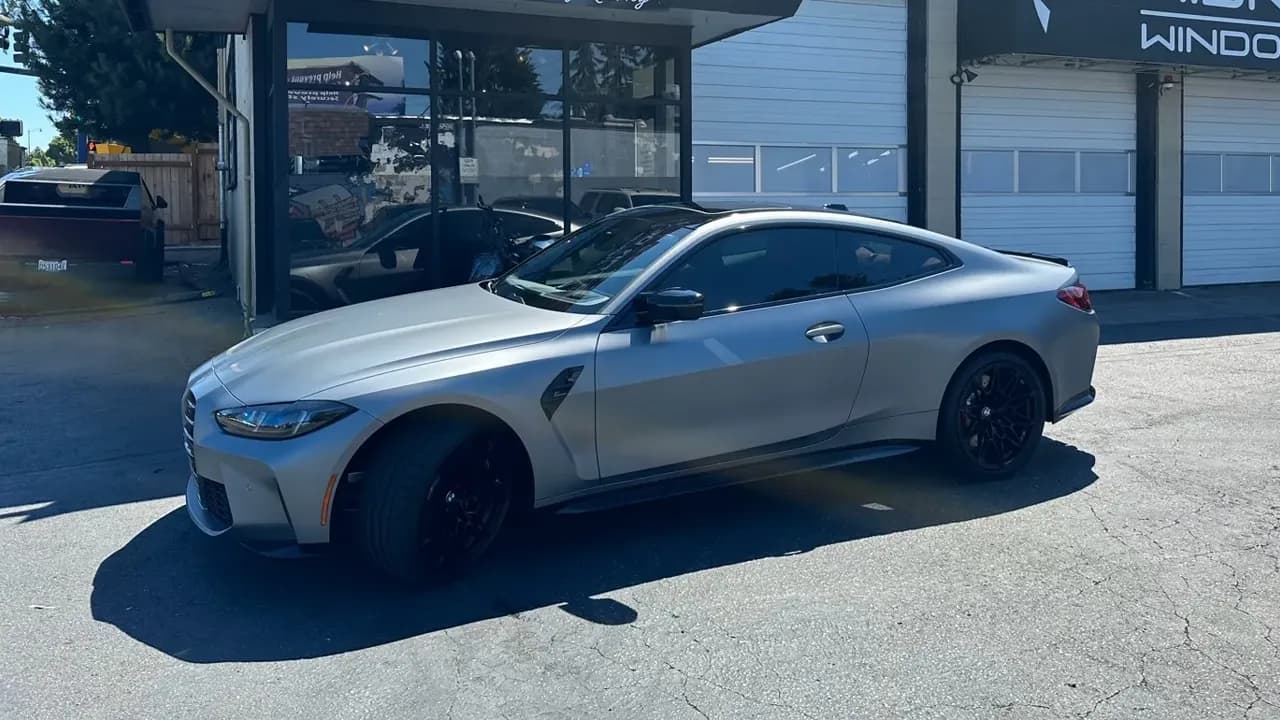
At a Hawaii safety check, window tint has to clear three items in the state's inspection rules. The front doors have to meet the 35% limit when the inspector puts a tint meter on them. Any film on the windshield has to stay in the top strip or read at least 70%. And on a 2013 or newer vehicle, film on the back glass cannot cover the third brake light.
The statute adds conditions of its own, and it says the inspection is to test film against everything in the statute: a vehicle with film behind the driver needs a rearview mirror on each side, and mirrored or highly reflective red, yellow, amber or blue finishes are banned.
This is how the statute and the inspection rules read in November 2026. The statute changed in 2025, so pages written before then give the old limits. If your front doors are dark and you do not know what they read, have them metered before the inspection is due.
Do they really check tint at a safety check?
Yes. The Hawaii statute on window film, HRS 291-21.5, says the safety inspection has to include a test of the glass and any film on it. The state's inspection rules say how: film added after the vehicle was built is measured with a light transmittance meter, the tint meter, and the readings are photographed and kept with the inspection record. Stations that inspect cars for the public are required to have a meter and to use it.
What do the front doors have to read?
The windows beside the driver and the front passenger have to pass at least 35% of visible light. That applies to a sedan, a truck, an SUV and a van alike.
The number is the share of light that gets through, so a lower number is a darker window. The meter reads the factory glass and the film together, so the number that counts is the one taken on your vehicle, with your glass.
The rules build in an allowance. The meter has to be accurate to within six percent, and the inspector adds six percentage points to the reading on side and rear windows before comparing it with the limit. A front door that reads 29 on the meter is treated as 35.
Do not pick a film that only passes because of that allowance. It leaves no margin, and factory glass is not perfectly clear to begin with. A film sold as 20%, 15% or 5% reads far under the limit on a front door. This is why we confirm the legal shade against your own vehicle before any film is cut.
How dark can the rear glass be?
Behind the driver, the statute allows any darkness on the rear side windows of sedans, vans, minivans, trucks and buses, and on the rear window of any vehicle, as long as there is a rearview mirror on each side.
For sedans that is new. Sedans were held to the front-door limit on every window behind the driver until Act 129 was signed on May 29, 2025. If your sedan failed in an earlier year because of dark rear glass, that reason is gone, as long as it has a mirror on each side.
Factory privacy glass on the back of many trucks and SUVs sits around 20 to 25%. Matching it on the rear doors of a sedan is legal today, as long as there is a mirror on each side. Our Hawaii tint law page covers the 2025 change.
What about the windshield?
The windshield is stricter than the rest of the vehicle. A strip of film is allowed across the top, down to the AS-1 line marked on the glass, or four inches from the top where there is no mark. That is the strip we install for glare on the afternoon Queen K drive.
Film on the rest of the windshield has to read at least 70% on the meter, and the inspector does not add the six points there. If you have a clear heat-rejecting film over the whole windshield, the 70% has to show on the meter, through the glass and the film together, so the number printed on the film does not settle it. Ask an inspection station or a tint shop to put a meter on the windshield before the inspection is due.
Can tint cover the third brake light?
Not on a 2013 or newer vehicle, and it is safest to keep it clear on any vehicle. The inspection rules have one more tint item: film added to the rear window may not cover the part of the glass that the high-mounted brake light shines through. A 2013 or newer vehicle with film over that light fails the safety check, however legal the shade is.
That item is written for film added later, it does not name factory glass, and it applies only to 2013 and newer vehicles. A separate lamp rule, with no model year in it, fails a vehicle when a required lamp is obscured in any manner. The rules do not say how an inspector applies that to film over the third brake light of an older vehicle, so keep film off the part of the glass the light shines through, whatever the year.
What happens if the car fails?
A vehicle that fails gets a signed notice of the failed inspection, and no sticker. The inspection rules fail a vehicle for film in three ways:
- The front doors read under 35% on the meter, glass and film together, after the six points are added.
- Film on the windshield, below the top strip, reads under 70%.
- Film on the back glass covers the third brake light on a 2013 or newer vehicle.
Front-door or windshield film that reads too dark has to come off. For the third brake light, the rule is only that no film sits over the part of the glass the light shines through. Film on the rear glass of a vehicle without a rearview mirror on each side is another way to fail, because the statute allows film behind the driver only when there is a mirror on each side.
If the film is darker than the statute allows, start with whoever installed it. Under the statute, an installer who puts on film that does not comply has to replace it with film that does, free of charge, or reimburse you for what another installer charges to do it.
If the installer is gone, or the film came with the car, it is the same job from a different shop. We offer old tint removal: the film is steamed off, the adhesive is cleaned from the glass, and a legal shade goes on. Rear glass that passes can stay as it is. Our automotive window tint in Kona page shows the films we install.
A legal front shade does not have to mean a hot cabin. Our guide to ceramic, carbon and dyed film compares how much heat each type rejects at the same shade.
Do you have to keep a tint certificate in the car?
Yes. When film is installed, the installer has to give the owner a certificate saying it complies with the law, and the certificate has to be kept in the vehicle at all times. We issue one with every install.
This is not the safety check paperwork. The inspection rules do not mention the tint certificate, so the inspector may never ask for it. Where it matters is on the road. If you are cited and the certificate is not in the vehicle, the statute treats that as evidence that the installer did not comply, and the installer's receipt identifies who did the work. Keep both in the vehicle.
Can you get a tint ticket outside a safety check?
Yes. A safety check is not the only time tint gets looked at. In August 2025 the Hawaii Police Department put out a public reminder about over-dark tint on Big Island roads after numerous complaints.
Film that breaks the statute carries fines: 300 to 550 dollars for the vehicle owner for each offense, and 700 to 1,200 dollars for the installer. The police reminder quoted lower figures. These are the amounts in the statute as amended in 2025.
Two more rules in the statute:
- Windows down at a traffic stop. Since Act 129, the driver and every passenger in a vehicle with applied tint must fully roll down their windows when an officer stops them. The exception is a physical disability or a window that will not work, and then the driver has to cooperate another way. New film is not one of the exceptions. Failing to do it can be cited as a traffic infraction.
- No mirror finishes. The statute bans mirrored or highly reflective film that shows red, yellow, amber or blue from outside. The inspection rules do not list it as a reason to fail a vehicle, but the statute says the inspection is to test film against all of its requirements, so do not count on a colored mirror film getting through. Every film we install is a neutral, non-reflective carbon or ceramic.
What should you check before the inspection?
- Find the AS-1 mark near the top of the windshield and check that any tint strip stops at it, or within four inches of the top where there is no mark.
- If there is film on the back glass, check that the third brake light is not behind it.
- If there is film on the rear glass, check that both side mirrors are there and usable.
- If the tint went on in the last five days, leave the window up and book the inspection for after that. Otherwise make sure the driver's window can be lowered, because a vehicle does not pass if it cannot.
- Do not judge the front doors by eye. Only a tint meter gives a number, so have them metered before the inspection is due.
- Put the installer's tint certificate and receipt in the glovebox.
If the front film has to change, build a proposal with a legal front shade, or call us in Holualoa at (808) 495-4425.
Next step
Get an estimate for your vehicle
Build a proposal in a couple of minutes and see pricing straight away. Brett reviews every one personally and confirms the final figure before anything is booked.