
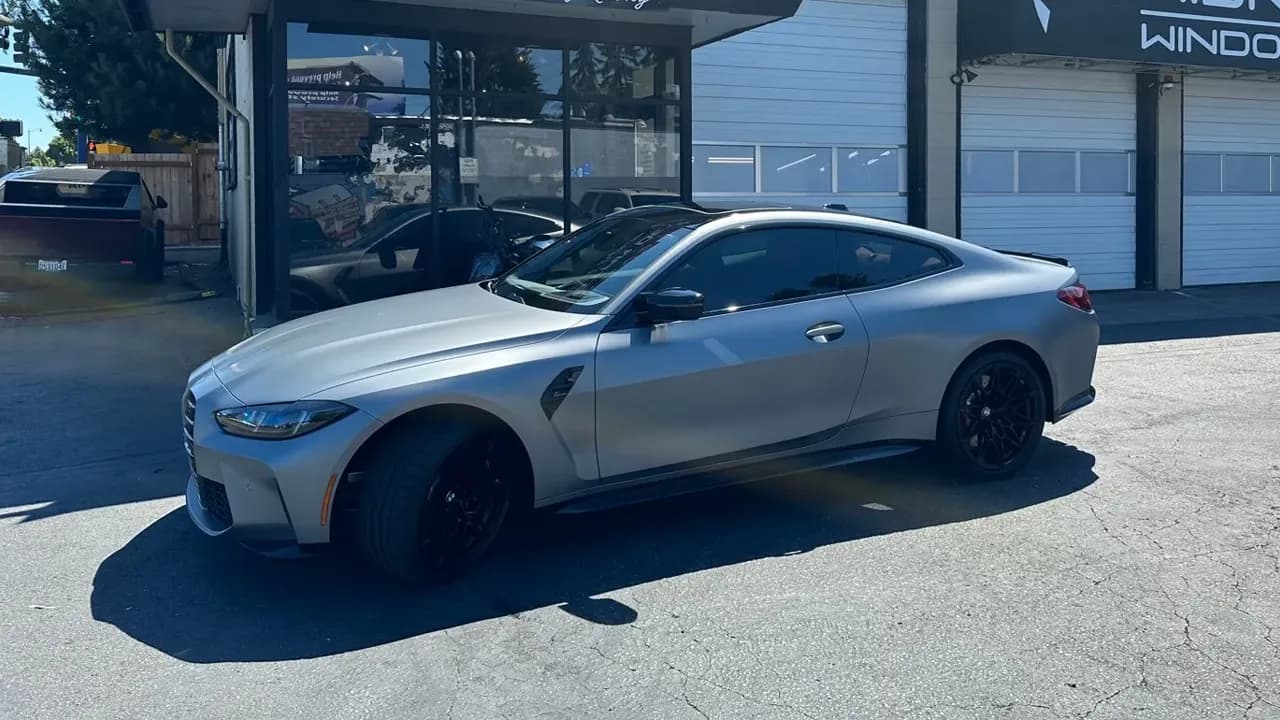
A vehicle you own for pleasure and a vehicle you run as an asset are different problems. One is about how it looks to you; the other is about total cost over a holding period, customer experience, and what it is worth at the end. Kona has a lot of the second kind — rental fleets, resort and activity shuttles, contractor trucks, and service vans.
Here is where protection actually pays on a vehicle that has a spreadsheet attached to it.
What this island does to a working vehicle
Sun, constantly. Vehicles that live outdoors on the Kona side take year-round high UV. On a fleet vehicle this shows up as faded dashboards, cracked steering wheels, bleached seat fabric and hazed headlights — all of which are visible to a customer and all of which reduce what the vehicle fetches at disposal.
Highway grit. Open coastal highway driving across lava country throws cinder and grit at front ends. On a fleet running the same route daily, that damage accumulates fast.
Salt and vog. Coastal air carries salt inland, and the Kona side is frequently downwind of volcanic emissions. Both leave deposits that want washing off, and both work on any point where the paint is already broken.
High turnover use. Rental and shuttle vehicles get handled by people with no stake in them. Door edges, door cups, load areas and interiors take far more abuse per mile than a private car.
Ceramic tint: the clearest return
If you do one thing to a passenger-carrying fleet, do this.
For the customer or passenger, a vehicle that is not painfully hot at pickup changes the experience immediately. On a rental, that is the first impression. On a resort or activity shuttle carrying guests in the middle of the day, it is the whole ride.
For the asset, 99% UV rejection is what keeps the interior from ageing. Dash cracking, wheel degradation and fabric fade are what make a three-year-old vehicle look five, and they are almost entirely UV damage. Tint is the cheapest intervention against it.
For running cost, less heat load means the air conditioning works less hard.
Hawaii's rule applies across the fleet: at least 35% VLT on front side windows on every vehicle. Since Act 129 in 2025, rear glass can be darker on any body style, which lets us give passenger comfort and privacy in the back while every vehicle stays legal up front. We keep the shade consistent so a mixed fleet looks uniform.
Paint protection film: target it
Full-vehicle PPF rarely makes sense on a fleet. Targeted coverage often does.
The front end takes essentially all of the impact damage. A full-front kit — bumper, hood, fenders, mirrors, headlights, fogs — is the coverage that protects the panels that actually get hit. Compare that against repainting a bumper and hood to a colour match on one vehicle, and the maths tends to work on any vehicle you are holding for a few years.
Door cups and door edges are inexpensive and they are where turnover damage concentrates. On a rental fleet this is the highest ratio of damage prevented to dollars spent on the whole list.
Headlights haze under UV and modern assemblies are expensive. Film on them is cheap.
Load areas and rear bumper tops on vans and trucks, where things get slid in and out.
Ceramic coating: the washing argument
For a fleet, a ceramic coating is a labour argument more than a cosmetic one.
Vehicles get washed frequently and often quickly, by people working through a queue. Fast washing is how paint gets swirled. A coated vehicle releases dirt with far less contact, so the same rushed wash does less damage. Over a holding period that is the difference between paint that still looks presentable and paint that has gone dull.
It also helps directly against the acidic side of vog and against salt deposits, and it makes bug and road film removal much quicker.
Coated glass is worth considering for shuttles and anything driven at night — rain sheets off and vog film wipes away rather than smearing.
Graphics and branding
For a branded fleet, vehicle wraps and graphics are advertising that works whenever the vehicle is moving, and unlike paint they come off cleanly at end of lease or resale.
We handle design as well as installation — layout and artwork through to production and fitting — and we keep application consistent across a fleet so vehicles match. Partial graphics, door decals and full wraps are all options depending on budget and how visible you want to be.
Work trucks and vans
Contractor and service vehicles have their own priorities:
- Tint for a cab that sits in the sun between jobs. Comfort is a retention issue for drivers.
- Front-end PPF if the vehicle covers highway miles daily.
- Rocker and lower-body film for unpaved access roads.
- Graphics, because a work vehicle is a rolling advert.
- Interior protection, because these interiors take the hardest use of anything we see.
How fleet work is scheduled
Fleet jobs are planned around your rotation, not ours. Practically that means:
- Batching. Vehicles come through in groups so you are never short more than you can absorb.
- Consistency. Same film, same shade, same coverage across the fleet, documented so a vehicle added next year matches.
- Volume pricing. Talk to us about numbers.
- Documentation. Every job is recorded in your portal, so warranties and specifications are in one place rather than in someone's memory.
Where the money goes back
Over a typical fleet holding period, protection shows up in four places:
1. Resale. A vehicle with intact paint on the nose, an interior that has not been UV-cooked and clear headlights sits in the top band for its model and mileage rather than the middle. 2. Repairs avoided. Chips, scuffed door cups and hazed lights are the small repairs that add up across a fleet. 3. Customer experience. For rentals and guest transport, comfort and presentation are the product. 4. Downtime. Fewer cosmetic repairs means fewer vehicles off the road.
Talk to us about your fleet
Whether it is three vans or thirty rental vehicles, the right specification depends on how long you hold vehicles, what they do, and what they are worth at the end. Call the shop at (808) 495-4425 or build a proposal online and note the vehicle count — we will put together a fleet specification and a schedule that fits how you actually operate.
Next step
Get an estimate for your vehicle
Build a proposal in a couple of minutes and see pricing straight away. Brett reviews every one personally and confirms the final figure before anything is booked.