
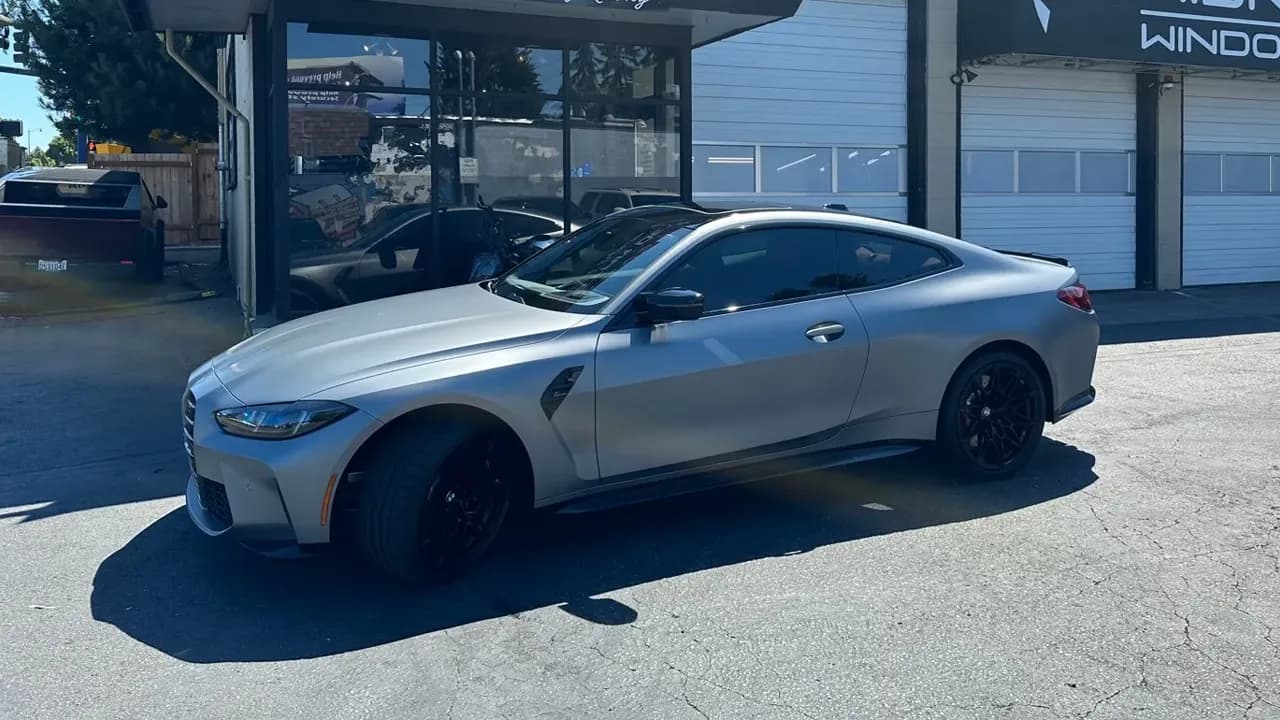
Teslas and other EVs are a large share of what comes through the shop, and they present a specific set of problems. Big glass, soft paint, and an owner who notices cabin temperature more than most because it costs range. Here is how we approach them on the Big Island.
Why EVs are different
The glass area is enormous. A Model Y or Model 3 has a single-pane glass roof running most of the length of the cabin, plus a steeply raked windshield that extends much further back than a conventional car's. That is a great deal of surface pointed at a sky that, in Kona, is delivering as much solar energy as anywhere in the United States.
Heat costs range. In a combustion car, air conditioning costs fuel most people do not track. In an EV it costs range, visibly, on the display. Reducing the heat load is a comfort upgrade and an efficiency one.
The paint marks easily. Tesla paint has a reputation for being soft, and our experience matches it. Swirls appear readily, and the front end chips on open highway driving.
Cabin surfaces are large and light. Big screens, light interiors and a lot of exposed trim, all of which UV ages.
Start with the roof
This is the recommendation people are most surprised by, and the one they thank us for most.
The factory glass roof does block UV well. What it does not fully stop is infrared — the part of the spectrum you feel as heat on your head and shoulders. On an overcast mainland day that is fine. Parked in an open lot in Kona at midday, it is a greenhouse.
A ceramic IR film on the glass roof cuts that dramatically. It is not about making the roof look dark; it is about the panel above you no longer radiating heat down into the cabin. On a vehicle that parks outdoors here, it is the single biggest comfort change available.
Then the windshield
The Model 3 and Model Y windshield is large and steeply raked, which means it presents an enormous area to the sun and it points upward.
A 70% clear ceramic IR windshield film is nearly invisible, does not darken your view at night, and removes a substantial amount of heat before it reaches the cabin. Hawaii permits darker film on the windshield only above the AS-1 line, but a clear 70% film is a different product entirely — it is about heat, not shade.
Between the roof and the windshield, you have addressed the two largest pieces of glass on the vehicle, and those are where the heat is coming from.
Side windows and the law
Front side windows must let at least 35% of visible light through in Hawaii. That applies to a Tesla exactly as it does to anything else.
Since Act 129 in 2025, rear side windows and the back glass can go darker on any vehicle, sedans included, provided both side mirrors are working. That changed the calculation for Model 3 owners in particular, who previously sat under the same 35% rule all the way round.
Ceramic film at a legal 35% on the fronts will out-perform a dark, cheap film for heat. Darkness is not the same thing as heat rejection — see our film comparison guide for the detail.
Paint protection film
If the paint marks easily and the roads throw cinder at it, this is where film earns its cost.
The front end is the priority. Bumper, hood, fenders, mirrors, headlights and fogs take essentially all of the impact damage. The Ultimate (full front) kit is the most popular choice on Teslas because a partial hood leaves a visible line, and on the darker colours people notice it.
Beyond the front:
- Door cups and door edges. Cheap to cover, and the frameless-feeling doors on these cars get handled constantly.
- The rear-quarter loading area. Anywhere bags get slid in and out.
- Rocker panels, if you drive unpaved roads.
- Full vehicle, on a car you intend to keep looking new.
The film we use is 8 mil with a self-healing layer and a ceramic top coat, warranted up to 10 years. Self-healing matters here specifically because soft paint plus abrasive volcanic dust equals swirls — and swirls in film flatten out with heat rather than needing correction.
Ceramic coating on top
The common package on a new Tesla is full-front PPF, ceramic coating over the whole vehicle including the film, ceramic IR on the roof and windshield, and a legal 35% on the fronts. That combination addresses impact, chemical attack, heat and washing damage together.
The coating matters more on soft paint than on hard paint, because the easier a car is to wash safely, the less it gets marked.
Other EVs
The same logic applies across the board:
- Model S and Model X — same priorities, more glass on the X.
- Cybertruck — the stainless panels change the paint conversation entirely, but the glass is vast and PPF is still relevant for the surfaces that can mark. Wraps are also popular on it.
- Rivian R1T and R1S — big glass roofs, and these genuinely go off-road here, which moves rocker and lower-body protection up the list.
- Everything else — if it has a panoramic roof, tint the roof.
What to expect
- Tint is usually a few hours. You can wait in the lounge.
- PPF is a one to two day drop-off.
- Coating adds a day, and needs about a week to cure fully before washing.
- Doing them together is more efficient and we sequence the work so nothing is disturbed twice.
Aftercare is the same as any vehicle: windows stay up three to five days after tint, no washing for about a week after coating, and everything goes into your portal as a care guide.
Booking
Build a proposal online with your model and we will have an estimate ready before you arrive, or come by the shop in Holualoa and we will walk the car with you. Call (808) 495-4425 with anything specific.
Next step
Get an estimate for your vehicle
Build a proposal in a couple of minutes and see pricing straight away. Brett reviews every one personally and confirms the final figure before anything is booked.