
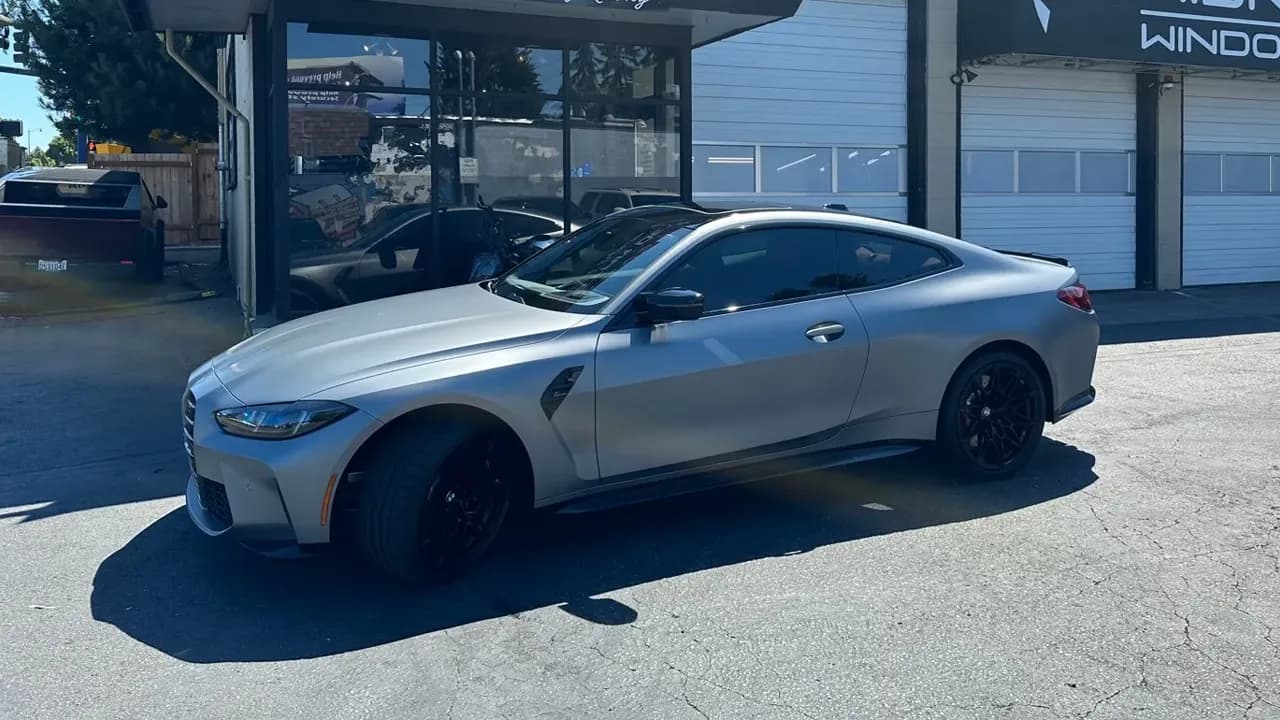
Wanting a different colour is a straightforward desire with two very different answers. Here is how vinyl wrap and a respray actually compare, with weight given to the thing most comparisons skip — what this island's sun does to both.
The fundamental difference
A respray is permanent. The colour is now the car's colour, and changing your mind means paying again.
A wrap is a large sheet of cast vinyl film conformed to every panel. It is reversible — removed properly, the original paint is underneath, and while the wrap was on, that paint was shielded from UV.
Almost everything else follows from that single distinction.
Cost
A wrap generally costs less than a quality respray and considerably less than a *good* one. A cheap respray exists but it is cheap for reasons that show — poor prep, overspray, panels not removed, and a finish that fails early. In this climate, an underprepared paint job fails faster than it would anywhere else.
Wraps also scale down cleanly, which paint does not:
- Accents — hood, roof, mirror caps — from a few hundred dollars.
- Chrome delete — trim, window surrounds, badges — a modest job with a large visual effect.
- Partial wrap — a defined section of the vehicle.
- Full colour change — the whole car.
- Commercial graphics — quoted per design.
You cannot part-respray a car and have it look intentional. You can absolutely part-wrap one.
Finishes you cannot spray
This is where wrap wins outright. Vinyl comes in finishes that are difficult or extremely expensive in paint:
- Satin and matte in any colour.
- Colour-shift and iridescent films.
- Brushed metal, carbon fibre and textured finishes.
- Chrome and specialty finishes.
If you want a satin colour-shift, wrap is the practical route.
How each holds up here
UV is the deciding factor on the Big Island. Hawaii sits close to the tropics, sun angles stay high, and there is no winter break from it. Everything fades faster here than the manufacturer's temperate-climate figures suggest.
Vinyl ages primarily on horizontal surfaces — roof, hood, upper rear. Those panels take the most direct exposure and they will always be the first to show it. Vertical panels last considerably longer. Reds, oranges and some blues are more prone to shifting than neutrals. A wrapped vehicle that garages overnight and is washed properly will outlast one that sits outdoors permanently, by a wide margin.
Paint fades too, and it does not come off. A faded respray is a respray. A faded wrap is a removal and a fresh wrap, over paint that has been protected the entire time.
Vog and salt affect both. The acidic haze from vog and the salt in coastal air sit on any surface and want washing off. A ceramic coating over a wrap is a genuinely good idea here — it makes the vinyl easier to wash, adds UV resistance and keeps the finish looking fresh. We coat wraps routinely.
Durability, honestly
Wrap is film. It is tough but it is not paint:
- Sharp impacts can tear it where paint would chip.
- Edges are the vulnerable points — around handles, mirrors, panel gaps.
- Pressure washing directly into an edge will lift it. Do not.
- Damage is repairable panel by panel, which is a real advantage. A damaged panel of wrap is re-wrapped; a damaged panel of paint is a blend job across neighbouring panels to match.
For impact protection specifically, paint protection film is the answer, not wrap. PPF is thicker, self-healing, and designed for it. Some customers run PPF on the front and wrap the rest.
Resale
A wrap is generally better for resale than a respray.
Buyers are cautious about repainted cars because a respray raises the question of why. A wrap removed before sale leaves original paint, which is exactly what a buyer wants to see — and paint that has spent years shielded from this sun tends to be in better condition than a comparable unwrapped car.
The proviso: a wrap left on too long, in this climate, gets harder to remove. Vinyl that has baked for years past its life can leave adhesive residue and takes far longer to strip. Plan to remove it while it is still in good condition.
When paint is the right answer
Wrap is not always correct:
- The existing paint is failing. Vinyl needs sound paint to adhere to. Peeling clear coat, deep rust or previous poor repairs mean the surface has to be fixed first, and at that point paint may be the sensible route.
- The car has significant body damage. Wrap conforms to what is underneath; it does not hide dents.
- You want it permanent and have no intention of changing again.
- Concours-level finish on a show or collector car.
We will tell you honestly if a vehicle is not a good wrap candidate. Wrapping over bad paint wastes your money and looks it.
Commercial vehicles
For a work vehicle or a fleet, wrap is not really in competition with paint.
- Vehicle graphics are advertising that runs whenever the vehicle moves.
- Wrap is removable, which matters at end of lease or resale.
- Fleets can be done consistently across vehicles.
- Design work is part of the job — layout, artwork and production, not just installation.
Aftercare
- Wait about a week before the first wash to let the adhesive set.
- Hand wash. Avoid brush-style automatic washes entirely.
- Do not aim a pressure washer at edges or seams.
- Remove bird droppings and sap promptly — they stain vinyl faster than paint.
- Park in shade or a garage where you can. This is the biggest single factor in how long it lasts here.
- Consider a ceramic coating over the wrap.
Our short answer
For most colour changes on a sound vehicle in Kona: wrap. It costs less, it is reversible, it protects the paint underneath, the finishes are better, and resale is cleaner. Accept that horizontal panels will age first and that shade parking materially extends its life.
Choose paint when the existing finish has failed, when the change is permanent, or when the vehicle demands a concours result.
Come by the shop in Holualoa with the vehicle and we will look at the paint, show you samples, and give you a straight recommendation either way.
Next step
Get an estimate for your vehicle
Build a proposal in a couple of minutes and see pricing straight away. Brett reviews every one personally and confirms the final figure before anything is booked.