
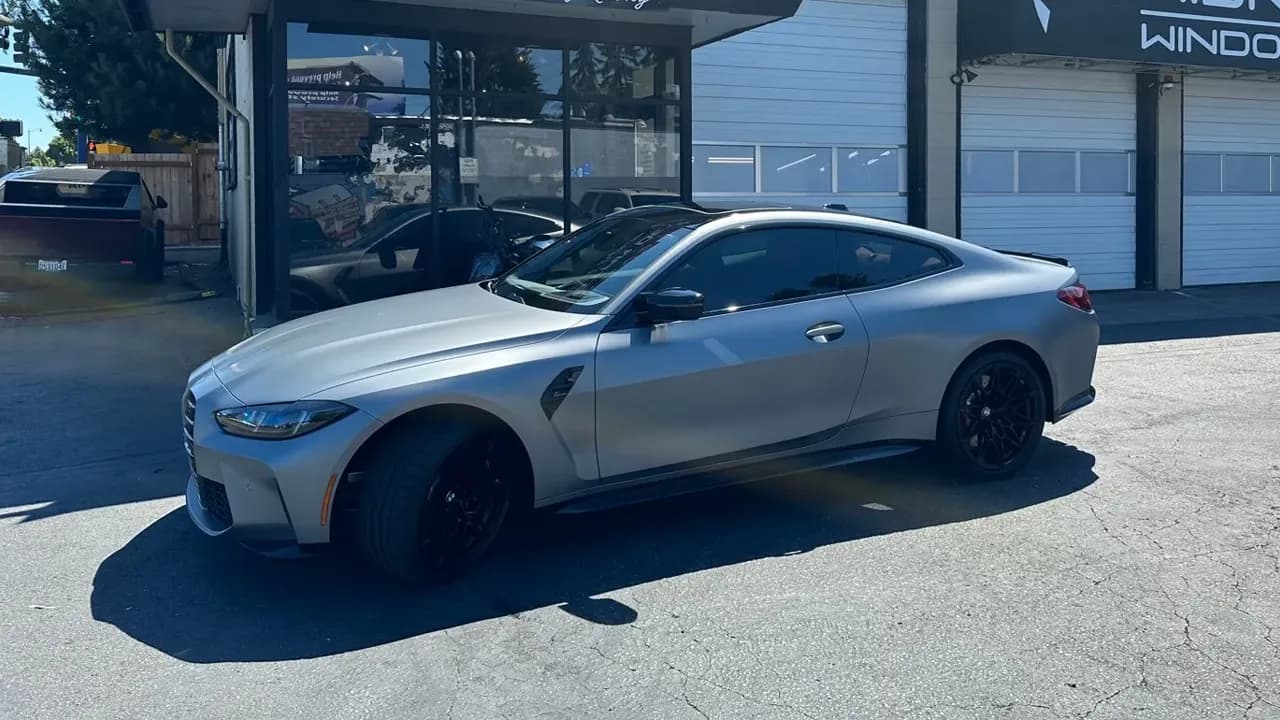
Your tint is installed and it looks slightly hazy, there is a small pocket of moisture in one corner, and you have been told not to touch the windows for a few days. All of that is normal. Here is what is actually happening and what to do over the next month.
What curing is
Window film is applied with a mounting solution — a slip solution that lets the installer position the film precisely on the glass before it is squeegeed down. Most of it is removed during installation. What remains is a thin layer of moisture between the film and the glass.
Curing is that remaining moisture evaporating out through the film until the adhesive has bonded completely to the glass. Until it has, the film is physically vulnerable.
Why it takes longer here
Evaporation depends on humidity and temperature. Hawaii is humid, so moisture leaves the film more slowly than it would in a dry mainland climate. A lot of the aftercare advice online is written for Arizona, and the timelines do not transfer.
Practically:
- Mainland dry climate: often clear in three to seven days.
- Kona and the Big Island: commonly two to four weeks for full clarity, sometimes a little longer for large rear glass or a vehicle that lives in shade.
Neither is a problem. It just takes as long as it takes.
The rules for the first week
Keep the windows up for three to five days. This is the important one. A window seal dragging across the top edge of film that has not fully bonded will lift or crease it. We lean toward five days in this climate. If you drive with the windows down constantly, plan around it.
Do not clean the inside of the glass for at least a week. There is nothing to clean yet, and pressure on uncured film can shift it.
Leave the water pockets alone. Do not press them, do not try to squeegee them out yourself. They resolve on their own. Pressing on them moves the film.
Park in the sun where you can. Genuinely — warmth speeds curing. A vehicle that sits in a covered garage all week will take longer to clear than one that spends afternoons outside.
Do not remove any factory stickers or apply anything to the film. Suction-cup mounts, stickers and toll transponders go on after curing, not before.
What is normal in the first weeks
- Haze or a slightly milky look. Moisture in the adhesive layer. Clears as it evaporates.
- Small water pockets or fine bubbles. Trapped solution. They shrink and disappear.
- A faint mottled or "orange peel" texture in certain light. This is the mounting solution and it flattens out as it dries.
- A very slight haze on the inside of the glass for the first few days.
What is not normal
Get in touch if you see:
- Bubbles that appear weeks or months later, particularly air bubbles rather than moisture.
- Film lifting at an edge or a corner peeling.
- Creases or fingers that do not flatten out after a month.
- Purpling or colour change. This does not happen to the colour-stable carbon and ceramic films we install — they carry a lifetime warranty against exactly this. If you see it, it is old film from a previous install.
- Scratches, which are physical damage rather than curing.
Our films carry a lifetime warranty against fading, bubbling and colour change, plus our workmanship. If something is not right, bring it back.
Cleaning tinted windows, long term
Once cured, tinted glass is easy to look after. Two rules:
No ammonia. Ammonia degrades film adhesive and can haze the film. That rules out a lot of common household blue glass cleaners — check the label. Use an ammonia-free automotive glass cleaner, or plain water with a drop of mild soap.
No abrasives. No blades, no scouring pads, no abrasive polish. Use a clean microfibre towel — one to clean, one to dry.
Beyond that: clean the inside as often as you like, avoid dragging grit across the film, and be careful with ice scrapers, which is advice you will never need here.
A local note on the outside of the glass
Film goes on the inside, so the outside of your glass is untinted and takes the full brunt of Kona conditions — vog film, salt, and volcanic dust. Glass here needs cleaning more often than you might expect, and a glass ceramic coating is a genuinely useful add-on: rain sheets off, and vog residue wipes away instead of smearing.
Timeline summary
- Days 1–5: windows stay up. Do not clean the inside. Leave pockets alone.
- Week 1–2: normal use resumes. Some haze and pockets remain.
- Weeks 2–4: haze clears, pockets disappear, film reaches full clarity.
- After that: ammonia-free cleaner, microfibre, and nothing else to think about.
We hand this over with every install and it lands in your portal as a care guide too, so you do not have to keep track. Anything that looks wrong, call us at (808) 495-4425 and bring it by the shop in Holualoa.
Next step
Get an estimate for your vehicle
Build a proposal in a couple of minutes and see pricing straight away. Brett reviews every one personally and confirms the final figure before anything is booked.