What this vehicle is up against
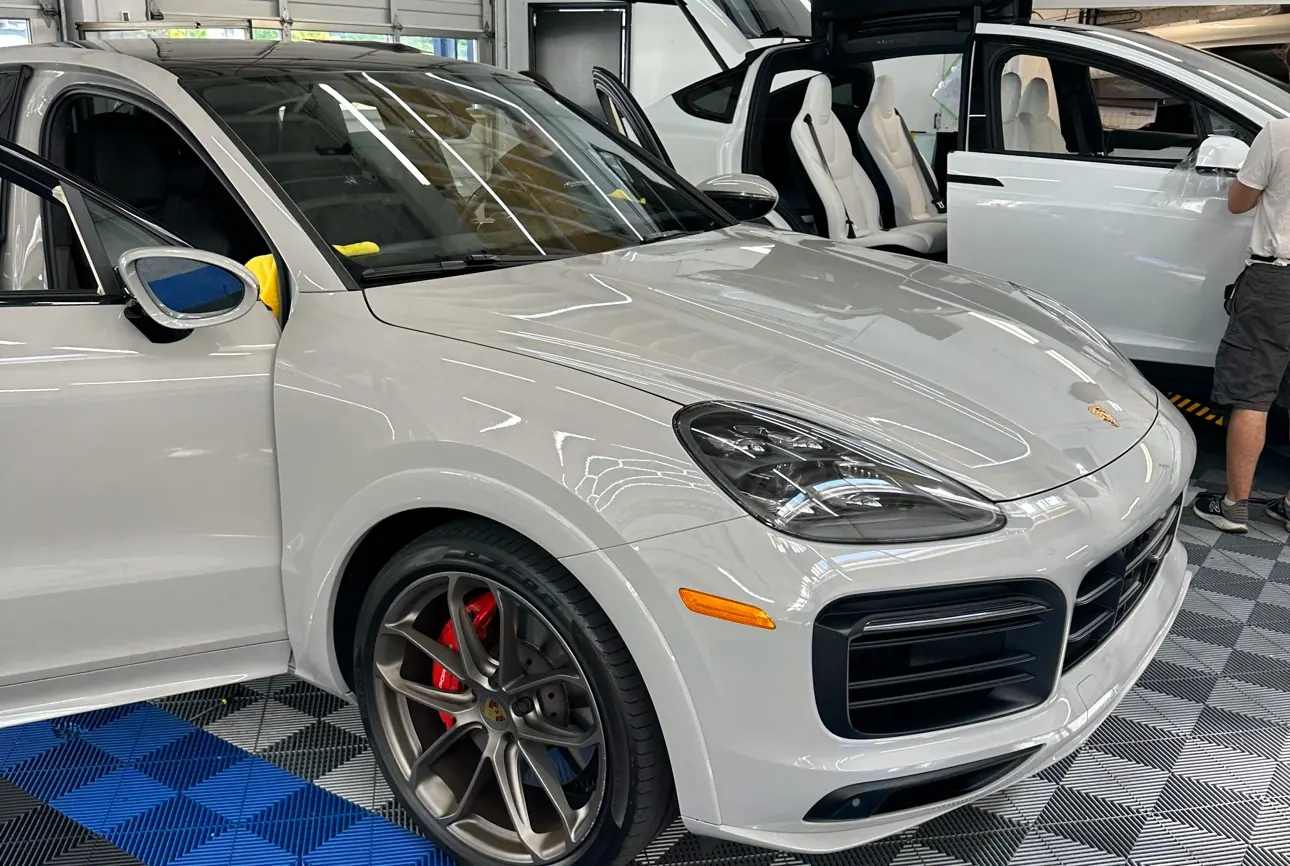
A Cayenne on the Big Island does most of its miles on the Queen Kaʻahumanu, and that highway is the problem. Fine volcanic grit gets picked up by every vehicle ahead and thrown at the front end at highway speed — it behaves less like dust and more like a slow sandblast. Salt air does the rest: once a chip opens the clear coat, the edge starts working outward instead of staying a dot. On a vehicle whose front bumper wraps a long way back under the car and whose hood is one big uninterrupted panel, the damage lands exactly where it is most visible and most expensive to put right. Touch-up on metallic Porsche paint is never invisible, and a respray is a resale conversation nobody wants to have.
What we would install, and why
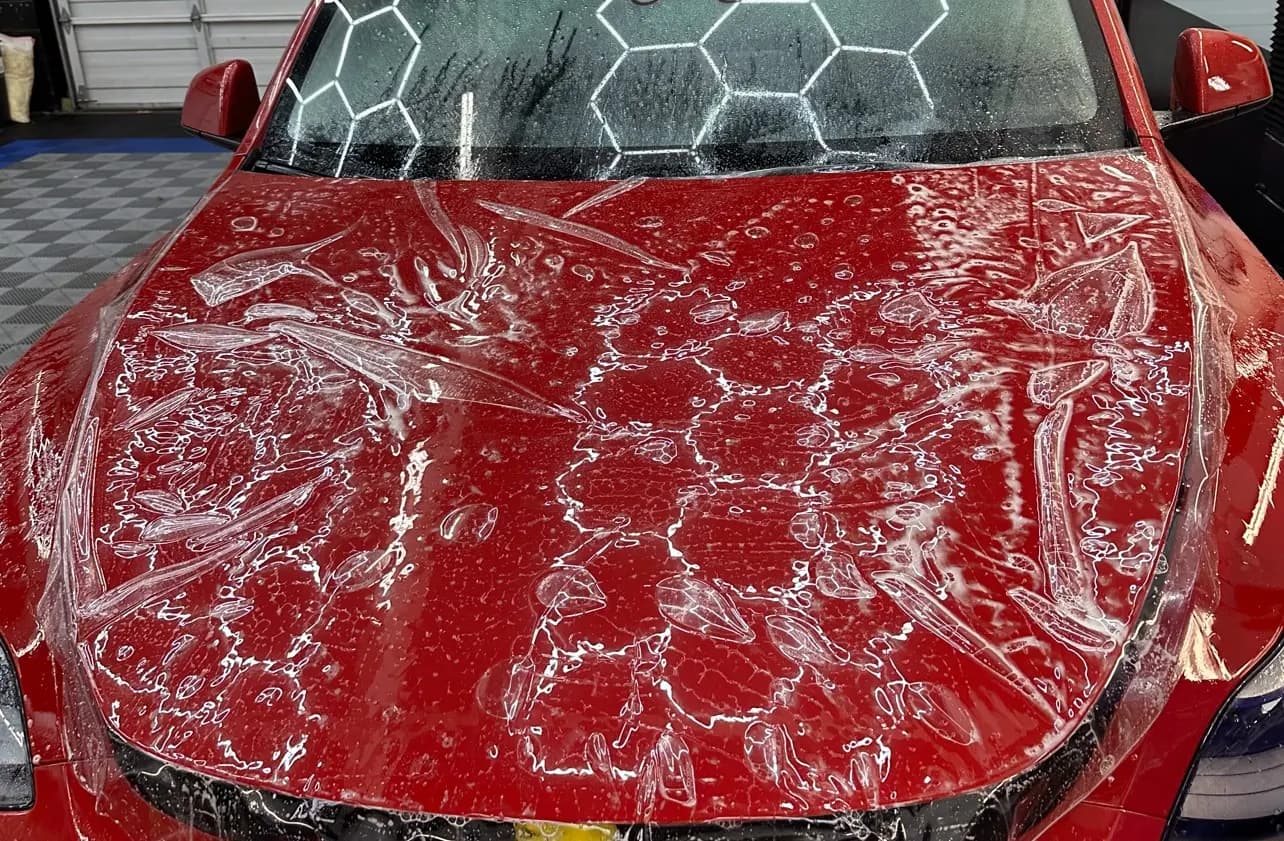
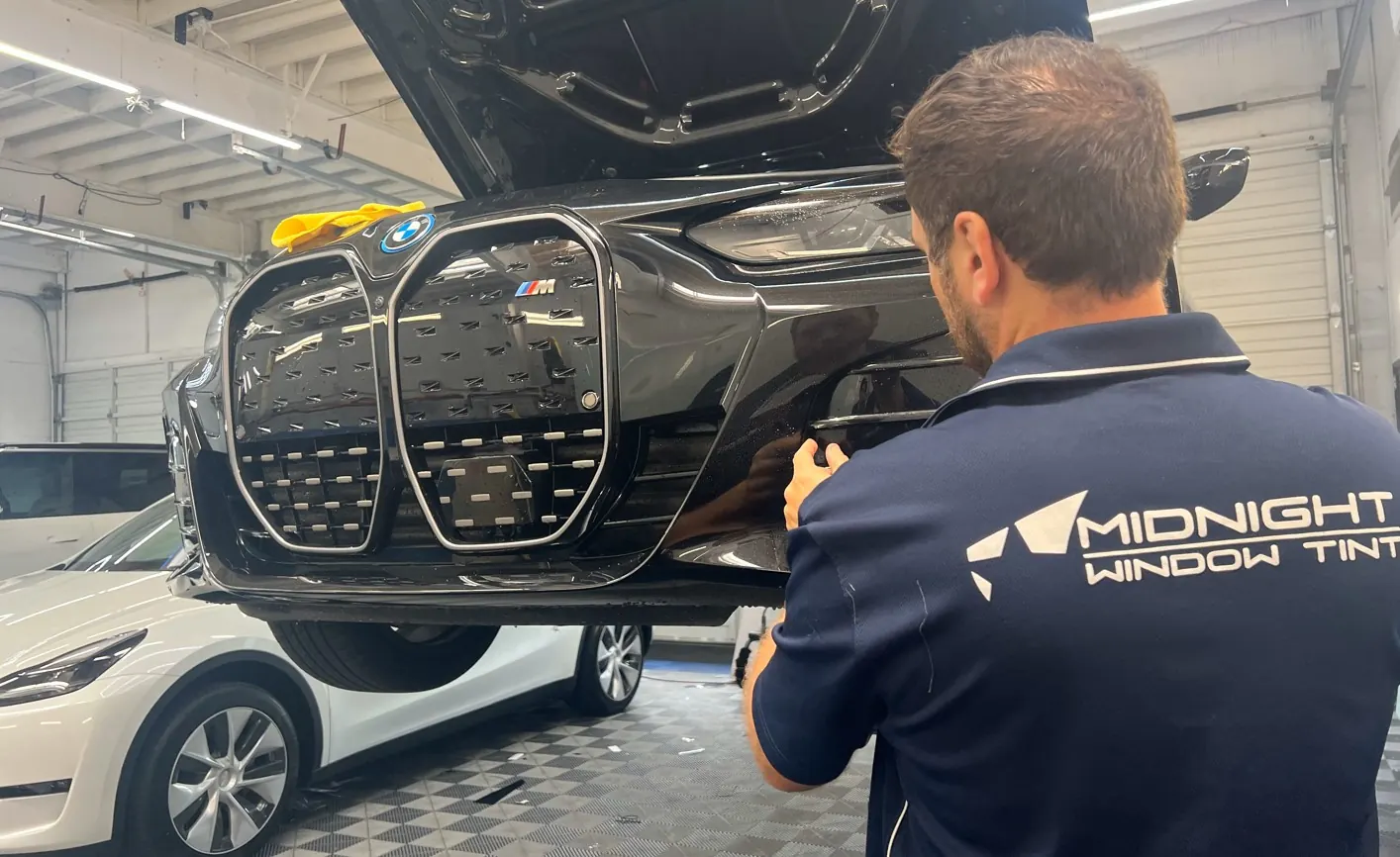
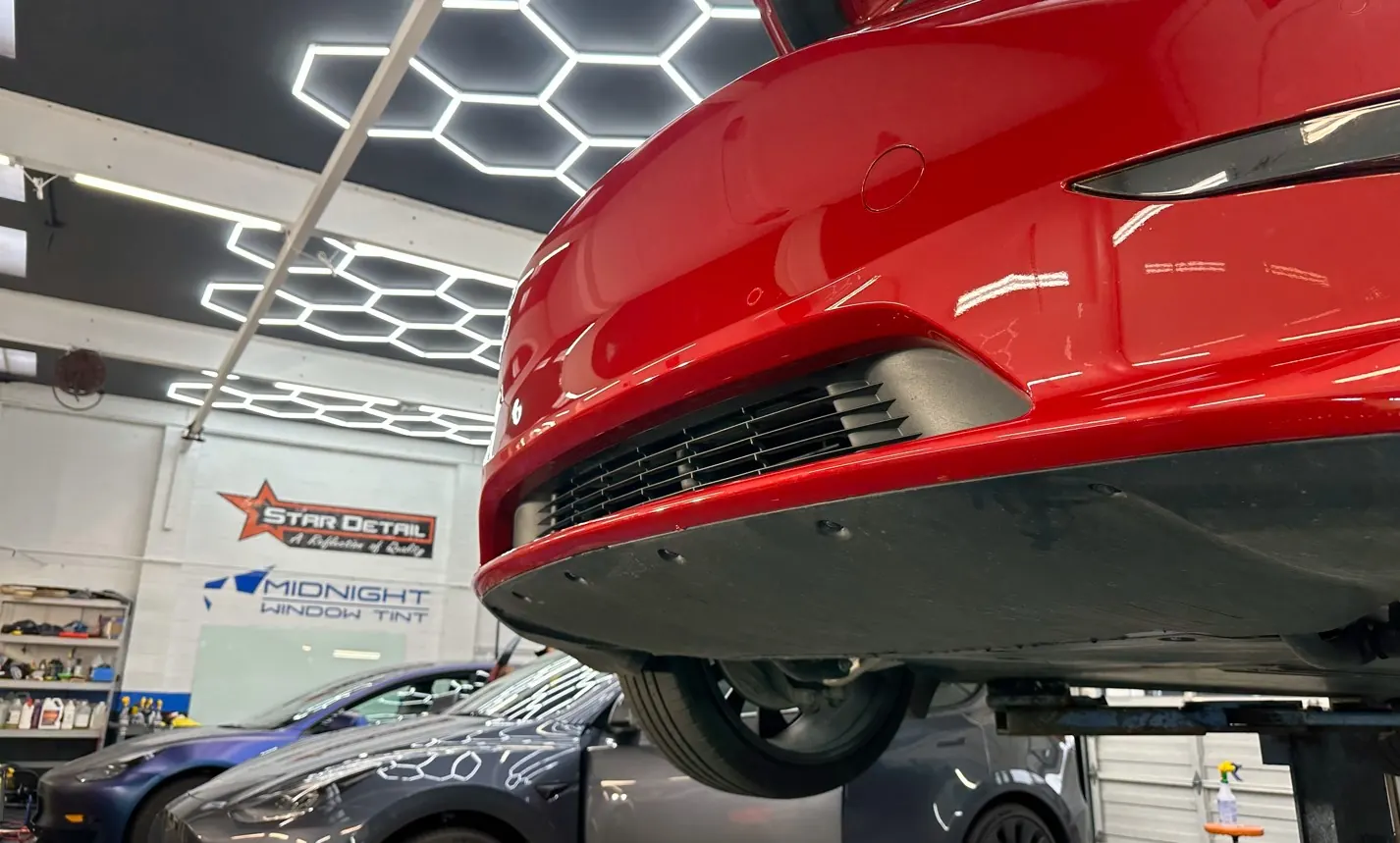
The kit we would spec here is Ultimate — Full Front. Full hood and full fenders rather than a partial, because a partial kit leaves a horizontal seam across the hood roughly twenty inches back, and on a light metallic under Kona sun that line is findable from ten feet away. Full panels mean the only edges are at panel gaps where they belong. Bumper, headlights, fog lights, mirror caps, door edges and door cups are all in the kit — the mirrors and door cups sound cosmetic, but they are where fingernails and door-handle grit do their work over years. Every piece is plotter-cut for the exact year and model, so no blade goes near the paint. Before any film goes down the paint is decontaminated, clayed and lightly polished, because film is transparent and permanent: whatever is on the panel on install day is sealed under 8 mil of urethane. The films we install are UPPF and STEK with a ceramic-infused top coat, which is what gives the self-healing behaviour — light swirls and wash marks close up with heat from the sun.
What the owner ends up with
What the owner ends up with is a front end where the impacts land on urethane instead of paint. The film is optically clear, so the finish reads as paint rather than as a covering, and the ceramic top coat means water and bug residue rinse rather than sit. Aftercare is short: no washing for seven days while the film gasses out, then hand washing with a pH-neutral soap and no brush car washes. Small haze or a fingerprint-looking mark near an edge in the first couple of weeks is the install solution still leaving and clears on its own. The warranty on the film is ten years against yellowing, cracking, peeling and bubbling. The resale argument is the quiet one: at trade-in the panels underneath are still factory paint, and that is what a buyer is actually paying for.