What this vehicle is up against
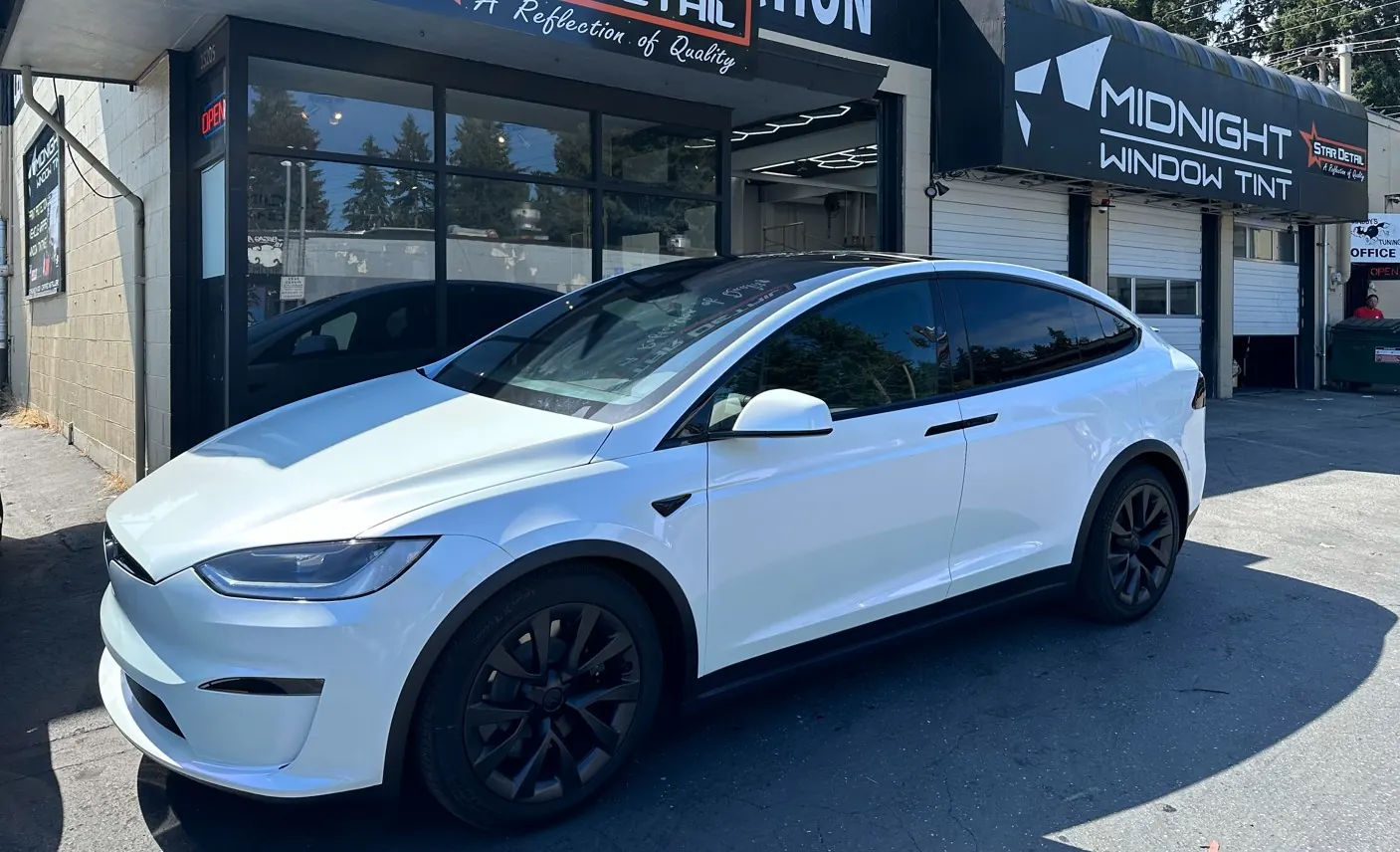
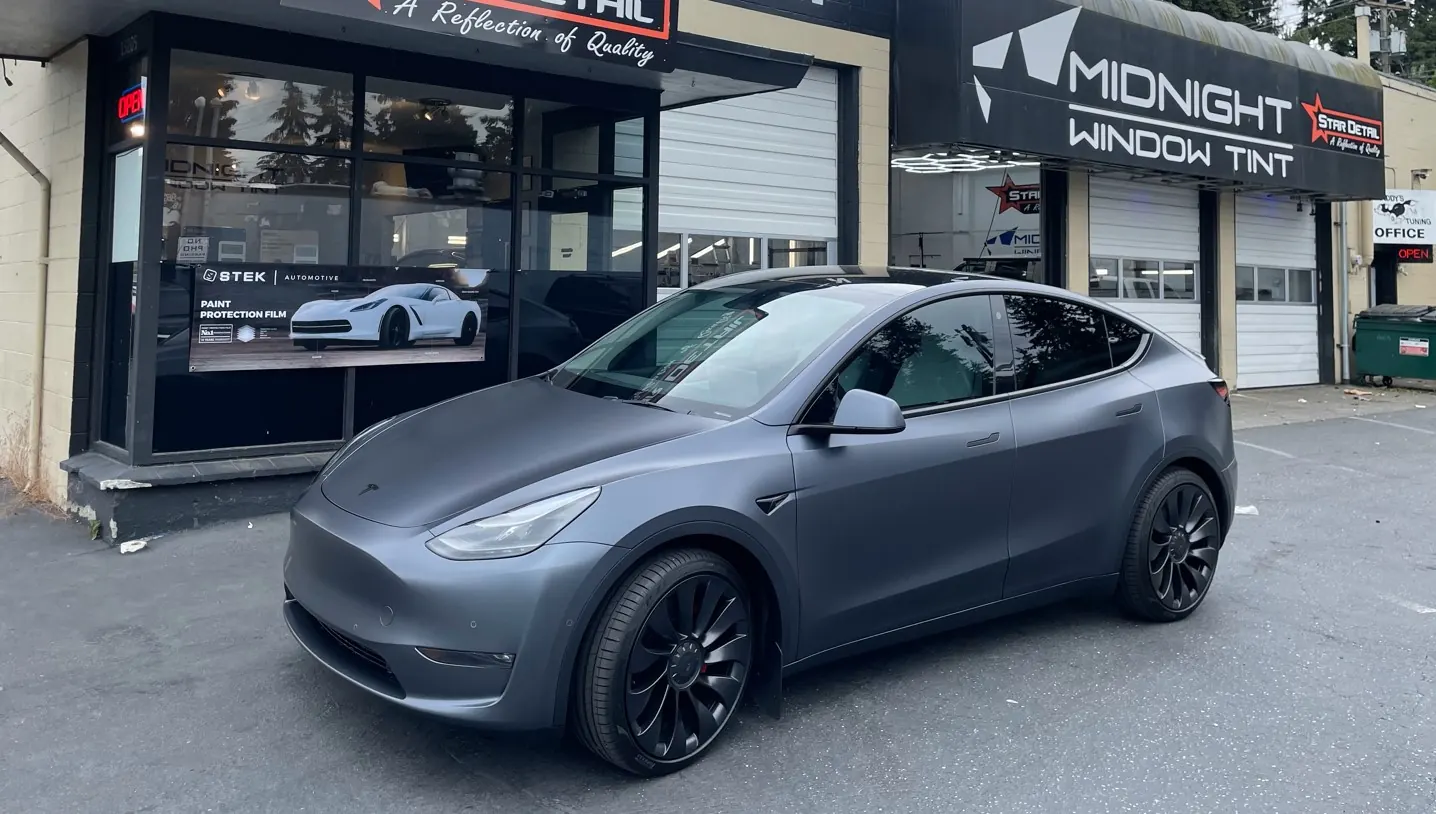
The Model Y's problem is geometry. A panoramic glass roof runs the length of the cabin, the windshield is enormous and rakes back a long way, and the factory glass rejects only a fraction of the infrared coming through it. Park it anywhere in Kona for an hour and the cabin becomes an oven — but the part owners feel first is range. Pulling a hot cabin back down to temperature is one of the heaviest loads an EV's climate system sees, and on a car whose battery is also the fuel tank, that comes straight off the miles. Tint is often sold as a privacy or looks upgrade. On this vehicle it is a thermal one, and it has to be done without a metallized film, because anything metal in the glass interferes with the key card, phone-as-key and the antennas buried around the cabin.
What we would install, and why
Ceramic IR is the package for this vehicle — nano-ceramic film with no metal in it, up to 98% infrared rejection and 70–85% total heat rejection, and no signal interference at all. Front sides go to Hawaii's legal 35% VLT; the rear can go darker, which is the split most owners want anyway. The two additions that matter more than the shade are a 70% clear ceramic IR windshield and film on the glass roof. The windshield is the single largest piece of glass on the car and untreated it does most of the heating; at 70% VLT the film is nearly invisible and stays well inside the law. The roof is the one people skip and then wish they hadn't — it is the panel directly above your head all day. Every piece is plotter-cut to the Model Y pattern, door cards are protected, the glass is triple-cleaned and the film is heat-shrunk and squeegeed edge to edge. No blade goes near the glass, which matters on a car with defroster lines and delicate encapsulated trim.
What the owner ends up with
The cabin comes back down to temperature faster and stays there with less work from the climate system, which is the whole point on an EV. Ceramic film is optically clear, so night visibility out of the rear glass is unchanged — the objection most people have to dark tint does not apply here. 99% of UV is blocked, which keeps the white interior trim and the seat material from going yellow and brittle in a climate with a UV index that regularly hits 11. Aftercare is simple: leave the windows up for three to five days while the film cures, and expect a little haze or a few small water pockets to clear over the following couple of weeks — island humidity slows evaporation down, and it is normal. The film carries a lifetime warranty against fading, bubbling and purpling.